

Why the Westside’s Coastal Communities Stay Resilient Through Any Cycle
Published on July 7, 2026 by
Stephanie Younger



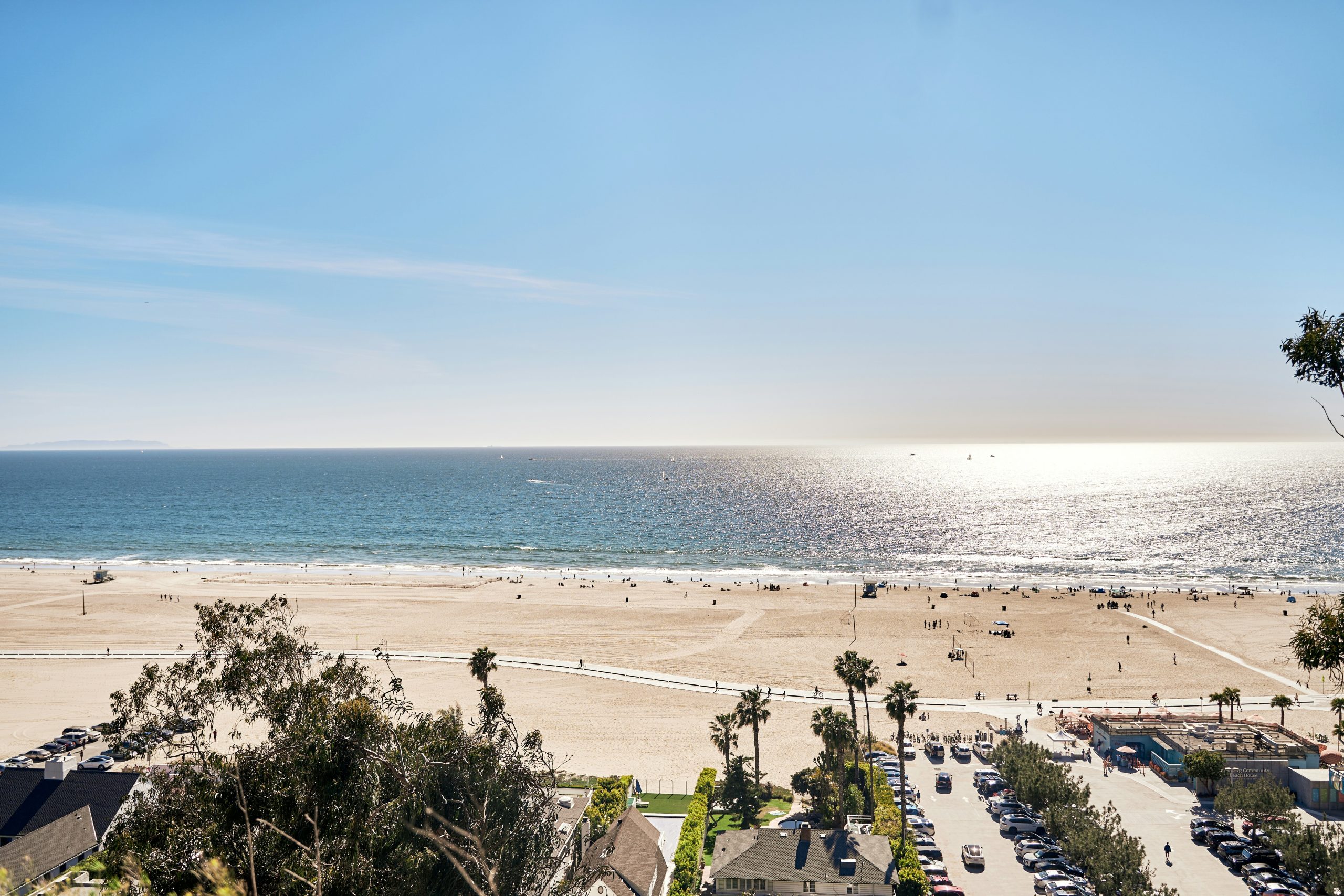
Every real estate market experiences cycles. Rates rise and fall. National headlines swing between optimism and anxiety. Broader economic conditions shift, sometimes quickly. What separates a durable market from a fragile one is not whether it experiences these cycles, but how it holds up through them — and on that measure, the coastal and coastal-adjacent communities of the Westside of Los Angeles have compiled one of the most consistent track records of any market in California.
This is not an accident, and it is not simply a function of desirability. The resilience of the Westside market is structural. It rests on a specific set of characteristics that most markets do not share, and understanding them is genuinely useful for anyone who owns property here, is considering buying here, or simply wants to understand why this corner of Los Angeles has behaved the way it has through decades of economic ups and downs.
We have transacted through enough market cycles to have a specific view on what makes this market durable. Here is the honest analysis.
The single most important driver of the Westside's resilience is the diversity of its employment base. Markets that depend heavily on a single industry are vulnerable to that industry's fortunes. The Westside does not have that vulnerability, because the economic base underneath it is genuinely diversified across several major sectors that do not rise and fall in unison.
The aerospace corridor anchored by SpaceX, and the broader cluster of aerospace and defense employers in El Segundo, Hawthorne, and the surrounding South Bay, provides a foundation of high-income, technically skilled employment that has proven durable across decades. The entertainment industry, concentrated in Culver City, Century City, and the surrounding Westside, brings a second major employment pillar with its own economic cycle. The technology sector — the Silicon Beach cluster spanning Playa Vista, Culver City, and Santa Monica — provides a third. Add healthcare, higher education anchored by institutions like Loyola Marymount and UCLA, and the professional services that support all of these industries, and the result is an employment base that is remarkably balanced.
When one sector experiences a downturn, the others provide ballast. That diversification is the reason Westside housing demand has remained fundamentally sound through economic conditions that hit more concentrated markets much harder. Buyers here are not dependent on any single industry's health, which means the demand that supports home values is not either.
The second pillar of Westside resilience is the structural constraint on housing supply. This is a market where the supply of homes is effectively fixed, and where meaningful new construction is limited by geography, zoning, and land availability.
There is very little developable land remaining in the established Westside neighborhoods. Westchester, Mar Vista, El Segundo, Playa del Rey, and the surrounding communities are largely built out. New supply comes primarily through teardown-and-rebuild and limited infill rather than through large-scale new development. That constraint means that even in periods of softer demand, the market does not face the oversupply dynamics that produce sharp price declines in markets where builders can rapidly add inventory.
The contrast with the markets experiencing genuine price softness in the current national environment is instructive. The markets where prices have declined most in 2026 are overwhelmingly the ones where inventory has surged past pre-pandemic levels — primarily Sun Belt metros where abundant developable land allowed builders to add supply rapidly. The Westside is the structural opposite of those markets. Fixed supply against sustained, diversified demand is the classic formula for price stability, and it is precisely the formula the Westside embodies.
The historical record on Westside appreciation is one of the more consistent in American real estate. Homes purchased in Westside coastal and coastal-adjacent neighborhoods across most multi-year periods in the past four decades have appreciated at rates that have built substantial wealth for their owners.
A home purchased in Mar Vista in the mid-1990s for $300,000 is worth $1.7 million to $2 million today. A Westchester property bought in the late 1990s for $350,000 now trades in the $1.4 million to $1.8 million range. These are not anomalies — they are representative of the broad pattern of Westside appreciation across a generation. Even accounting for the significant disruption of the 2008 financial crisis, which produced a genuine decline in the late 2000s, Westside values recovered and continued their long-term upward trajectory. The owners who held through that period were rewarded for their patience.
This consistency matters because it reflects the underlying durability of demand. Appreciation over long periods is ultimately a function of more people wanting to live somewhere than the supply can accommodate. The Westside has maintained that condition through every economic cycle of the past forty years, and the structural factors that produced it remain firmly in place.
The Westside is not standing still. Significant infrastructure investment is actively improving the long-term position of these communities, which supports the case for continued resilience and appreciation going forward.
The LAX Automated People Mover connects the airport to the regional transit network, improving connectivity for the entire surrounding area. The Metro K Line and the broader transit expansion improve access across the Westside. The 2028 Olympics are driving investment across Los Angeles, with the Westside positioned to benefit significantly given its proximity to key venues and the LAX gateway. The continued development of the Silicon Beach corridor and the ongoing evolution of Culver City into a major employment and cultural center all reinforce the underlying demand drivers.
Infrastructure investment of this kind does not produce overnight price movements, but it strengthens the structural foundation of a market over time. Communities that are becoming better connected, better served, and more central to the region's economic and cultural life are communities whose long-term value trajectory is supported rather than threatened by the direction of change.
Understanding the structural resilience of the Westside market has practical implications for the decisions people make here.
For homeowners, it means the equity in your Westside property rests on a durable foundation. The value you have built is supported by structural factors — employment diversity, supply constraints, consistent long-term demand — rather than by speculative momentum that could reverse quickly. That durability is worth understanding accurately, because it should inform how you think about your home as a financial asset and how you approach decisions about holding, selling, or leveraging that equity.
For buyers, it means that purchasing a well-located Westside property is a fundamentally sound long-term decision, even in a market environment that feels uncertain. The buyers who have done best on the Westside historically are the ones who bought sound properties in strong locations and held them through the inevitable cycles. The structural resilience of the market is what has consistently rewarded that patience. Buying into a durable market is different from buying into a speculative one, and the Westside has been durable for decades.
For everyone, it means that the national headlines about market softness — real as they are in the markets where they apply — should not be imported wholesale into decisions about Westside real estate. The Westside is a specific market with specific characteristics, and those characteristics have consistently produced outcomes that differ from the national aggregate. Making decisions based on the actual dynamics of your specific market, rather than on national averages, is the discipline that produces the best results.
Resilience is not the same as immunity. The Westside experiences cycles like every market does. Values softened during the 2008 crisis. Velocity slows during seasonal transitions and rate-driven pauses. The market here is not exempt from the forces that affect real estate everywhere.
What distinguishes the Westside is how it holds up through those cycles and how consistently it recovers and continues appreciating over the long term. That durability rests on real, structural foundations: a diversified employment base that does not depend on any single industry, a fixed supply of homes that prevents the oversupply dynamics that hurt other markets, a decades-long record of consistent appreciation, and active infrastructure investment that is strengthening the long-term position of these communities.
Those foundations are not going anywhere. They are the reason the Westside has been one of the most resilient markets in California through decades of change, and they are the reason we remain confident in the long-term trajectory of the communities we serve.
If you own here, that resilience is working in your favor. If you are thinking about buying here, it is one of the strongest arguments for doing so. And if you want to understand what it means for your specific situation, that is a conversation we are always glad to have.
The Stephanie Younger Group is based in Westchester at 7296 W. Manchester Avenue. For a current, grounded read on your specific Westside neighborhood — whether you are buying, selling, or simply understanding the value of what you own — call 310.499.2020 or reach out online.
Q: Why is the Westside of Los Angeles real estate market considered resilient?
The Westside's resilience rests on several structural factors: a diversified employment base spanning aerospace, entertainment, technology, healthcare, and education that does not depend on any single industry; a fixed supply of homes constrained by geography, zoning, and limited developable land; a consistent decades-long record of long-term appreciation; and ongoing infrastructure investment including the LAX People Mover, transit expansion, and 2028 Olympics preparation. Together, these factors have allowed the Westside to hold up through economic cycles better than more concentrated or supply-abundant markets.
Q: Does the Westside real estate market experience downturns?
Yes. No market is immune to cycles, and the Westside is not an exception. Values softened during the 2008 financial crisis, and velocity slows during seasonal transitions and rate-driven pauses. What distinguishes the Westside is how well it holds up through downturns relative to other markets and how consistently it recovers and continues its long-term appreciation afterward. Resilience means durability through cycles, not exemption from them.
Q: Why do Westside home prices hold up better than the national market?
Two main reasons. First, employment diversity: the Westside economy is balanced across several major industries that do not decline in unison, which keeps housing demand stable. Second, supply constraints: the Westside is largely built out, with very limited new construction, which prevents the oversupply dynamics that have produced price declines in Sun Belt markets where builders can rapidly add inventory. Fixed supply against diversified, sustained demand is the formula for price stability, and the Westside embodies it.
Q: How has Westside real estate performed over the long term?
Westside coastal and coastal-adjacent neighborhoods have compiled one of the most consistent appreciation records in California over the past four decades. Homes purchased in the mid-1990s have typically appreciated three to five times their original purchase price. Even accounting for the genuine decline during the 2008 crisis, values recovered and continued their long-term upward trajectory, rewarding owners who held through the cycle. This consistency reflects the underlying durability of demand in the market.
Q: Is now a good time to buy on the Westside given economic uncertainty?
For financially prepared buyers, purchasing a well-located Westside property remains a fundamentally sound long-term decision even in an uncertain environment. The buyers who have done best on the Westside historically are those who bought sound properties in strong locations and held them through the cycles. The structural resilience of the market — employment diversity, supply constraints, consistent long-term appreciation, infrastructure investment — is what has consistently rewarded that approach. Buying into a durable market is different from buying into a speculative one.


