

How to Keep Your LA Home Cool This Summer
Published on May 29, 2026 by
Stephanie Younger



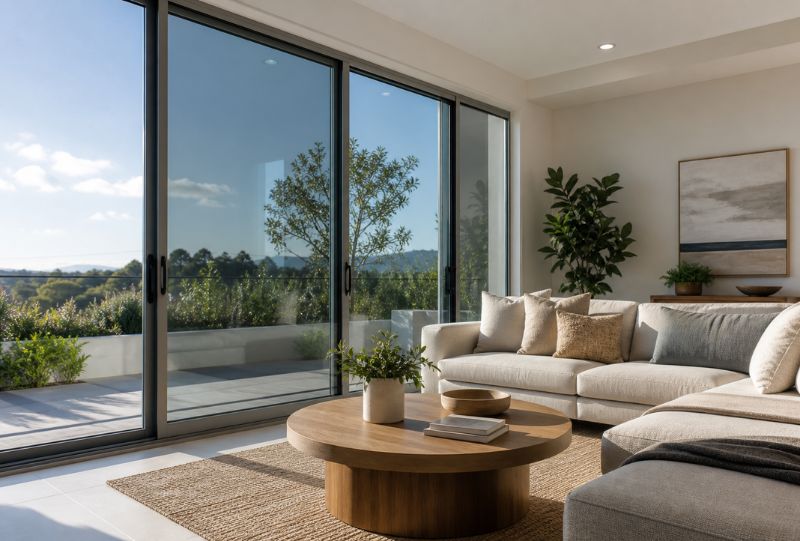
Summer in Los Angeles is not one uniform experience. On the Westside — Westchester, Playa Vista, Mar Vista, Venice — most July afternoons settle in the mid-70s, with the marine layer doing most of the work by evening. In the San Fernando Valley, that same afternoon can hit 105.
The gap matters because it changes what you actually need. A Woodland Hills homeowner without working AC is in a serious situation during a heat wave. A Westchester homeowner in the same position usually just needs to manage their windows well and wait for the afternoon breeze. Getting the strategy right starts with knowing which category your home falls into.
Here's what works, organized by how much effort and investment is involved.
Before spending money on anything, there are a few habits that consistently make a meaningful difference in how a home handles summer heat. Most people know these but don't actually do them consistently.
Keep south- and west-facing windows covered during the day. Sunlight coming through unshaded glass is the primary way homes heat up from late morning through late afternoon. Closing blinds or curtains on those exposures — before the sun hits them, not after the room is already warm — is the single most effective no-cost move. South and west-facing rooms are the priority. East-facing windows can stay open in the afternoon.
Open windows at night, close them in the morning. LA nights cool down meaningfully, even in the Valley. The right rhythm is to open the house after 8 or 9 p.m. to flush out the accumulated heat, then close everything up again before the sun starts working in the morning. Reversing this — leaving windows open during the day "for air" — lets heat in and keeps it there.
Run your ceiling fans correctly. Ceiling fans should spin counterclockwise in summer, which pushes air straight down and creates a wind-chill effect that makes a room feel 4 to 6 degrees cooler. Most fans have a small switch on the motor housing to change direction. Check it. And turn fans off when you leave the room — they cool people, not spaces, and a running motor generates its own heat.
Stop generating heat inside. Ovens, stovetops, dryers, and even plugged-in electronics add thermal load to your home. On hot days, plan meals that don't require the oven, run the dryer in the evening when temperatures drop, and unplug devices you're not using.
If your windows are covered with thin curtains or basic horizontal blinds, you're losing a significant amount of the battle before it starts.
Blackout curtains on south- and west-facing windows are one of the most cost-effective home comfort upgrades available. They block direct solar heat gain — not just light — and can make a room noticeably cooler on a hot afternoon. They're widely available, install in an hour, and work.
Cellular shades (also called honeycomb shades) offer insulation in both directions: they keep heat out in summer and cold out in winter. They're more of an investment than blackout curtains but perform better on a per-window basis over time, especially in rooms that get significant afternoon sun.
For homes with large south- or west-facing windows — a common feature in Westside homes built in the last two decades — exterior solar shades or window film are worth looking into. They intercept heat before it enters the glass, which is more effective than any interior treatment. Window film in particular is relatively low-cost to install and doesn't require changing your window hardware.
A lot of Westside homes were built before central air conditioning was standard, and many owners have never added it because coastal temperatures historically made it unnecessary. That calculus is shifting as heat waves reach the coast more reliably than they used to.
If you want cooling capacity without the cost and disruption of installing full central air, a ductless mini-split system is the most efficient option available. A single-zone unit handles one room or an open-plan area; multi-zone systems can cover an entire home with individual temperature control in each space. They're significantly more energy-efficient than window units, quieter, and don't require ductwork. Installation typically runs $3,000 to $6,000 per zone depending on the unit and the complexity of the install. If an existing system is struggling during the summer, getting the issue diagnosed promptly through AC Fix by Valderrama A/C & Refrigerationcan also help restore reliable cooling before temperatures climb.
Window AC units are a lower-cost option for individual rooms. They're effective in the space they serve and can be the right call if you only need to cool a bedroom or a home office during the hottest weeks of the year. The trade-off is noise and the fact that they're visible from outside, which some HOAs restrict.
For cross-ventilation in homes that have a good layout for it, a whole-house fan installed in the attic ceiling can move a significant volume of air when outside temperatures drop in the evening. They pull cool night air in through open windows and exhaust hot attic air out through vents. In Westside climates especially, they can dramatically reduce the need for mechanical cooling.
If you're planning any home projects and summer comfort is part of the calculus, a few upgrades consistently deliver:
Attic insulation. Heat radiates down from an uninsulated or poorly insulated attic and raises the temperature of the entire floor below it. Adding or upgrading attic insulation keeps that heat where it belongs. It also reduces heating costs in winter. Of all the home improvements that affect comfort year-round, this one has one of the better return profiles.
Shade trees on the west side of the house. It takes years to fully realize the benefit, but mature trees on the west-facing side of a home provide natural shading that no window treatment can replicate. Research has shown that strategic tree placement can reduce a home's cooling energy use meaningfully over time. If you're planting for the long term, the west side of the property is where trees earn their keep fastest.
A smart thermostat. If you have AC, a smart thermostat pays for itself fairly quickly through more precise usage: cooling the house before peak hours, reducing output when no one is home, and avoiding the grid demand spikes that drive up utility costs during heat events. The Westside is generally less dependent on this than the Valley, but it's a low-cost upgrade with clear upside.
Normal summer management and heat wave management are different problems.
During an extended heat event — three or more days of temperatures significantly above the seasonal average — the passive strategies above get stretched. Attics that stay hot overnight transfer heat into the living spaces continuously, and cross-ventilation becomes less effective when nighttime temperatures stay elevated.
In those conditions, having at least one room that can be actively cooled matters. A single window unit or mini-split in a bedroom is enough to sleep safely and comfortably even when the rest of the house is warm. If you don't have that option and a heat wave is forecast, the LA County cooling centers are a real resource.
Your home is your biggest asset. Keeping it comfortable through the summer is part of taking care of it well. If you have questions about what upgrades make sense for your specific property, or if you want to know how your home's condition compares to others in the market, we're a good place to start.
Do homes on the Los Angeles Westside need air conditioning?
Many Westside homes — particularly in Westchester, Playa Vista, Mar Vista, and areas close to the coast — were built without central AC because ocean breezes historically kept temperatures manageable. The Westside rarely breaks 85°F during a typical summer day. That said, heat waves do reach the coast, and homes without good ventilation, proper window coverings, or ceiling fans can get uncomfortable quickly. A mini-split system offers an efficient option for those who want AC without the cost of full central air.
What is the best way to cool a home without AC in Los Angeles?
The most effective strategy is to keep heat out during the day and flush it out at night. Keep south- and west-facing windows covered during daylight hours. At night, open windows on opposite sides of the house to create a cross-breeze. Ceiling fans set to run counterclockwise push air down and make a room feel 4 to 6 degrees cooler. These habits cost nothing and make a genuine difference.
What home upgrades help the most with summer cooling in LA?
The upgrades that deliver the most over time are attic insulation, exterior solar shading on south- and west-facing windows, and a whole-house fan for homes in coastal climates. For immediate impact, blackout curtains and ceiling fans are low-cost and effective. If you want mechanical cooling, a ductless mini-split is more efficient than a window unit and works well in homes without existing ductwork.
Why does the Valley get so much hotter than the Westside in summer?
The Westside benefits from marine layer and ocean breezes off the Pacific that moderate temperatures through most of the summer. The San Fernando Valley is inland, shielded from that coastal influence by the Santa Monica Mountains, which causes heat to build. During heat waves, the temperature difference between the Valley and the coast can be 20 to 30 degrees on the same afternoon.


