

Remodel or Sell? Why Most Westside Homeowners Should Sell
Published on April 29, 2026 by
Stephanie Younger



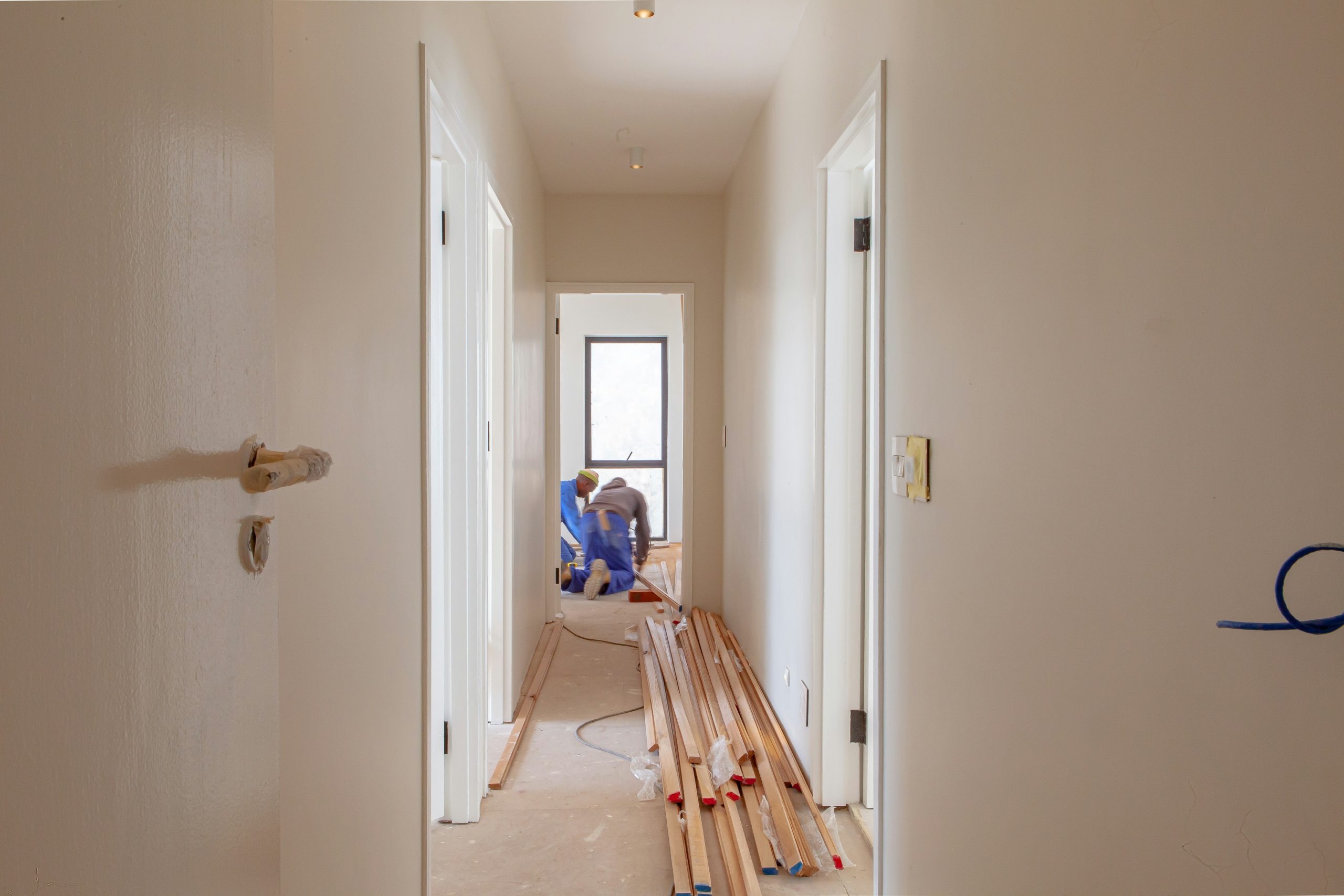
The decision usually arrives gradually. A second child means a shared bedroom that is getting smaller every year. A parent moves in and the guest room disappears. Remote work turns the dining table into a permanent office. The house that fit perfectly five years ago is now producing daily friction, and the question surfaces: do we remodel and add the space we need, or do we sell and move somewhere that already has it?
For most Westside homeowners, the instinct is to remodel. It feels safer. You know the neighborhood, the school, the neighbors. You avoid the disruption of a move. And on the surface, adding square footage to a home you already own seems more efficient than selling it and buying something larger.
That instinct is understandable. It is also, in most cases, the more expensive and less rational choice — and the numbers make a clear case for why.
Construction budgets in Los Angeles are among the highest in the country, and they have risen sharply since 2021. A ground-floor addition in the Westside market — the kind that adds a bedroom, a bathroom, and some meaningful living space — typically runs between $400 and $600 per square foot fully finished, including permits, engineering, and contractor overhead. Adding 500 square feet of quality space costs $200,000 to $300,000 in most Westside neighborhoods before you have accounted for carrying costs, temporary housing if the project displaces you, design fees, or the inevitable scope creep that extends most residential construction projects by 20% to 40%.
A kitchen expansion or a primary suite addition in a high-end finish runs similar numbers. An ADU — which solves a specific use case but does not actually expand the livable family footprint — starts at $150,000 for a modest detached unit and climbs quickly with size and finish level.
Here is what most homeowners do not factor in: the timeline. A meaningful addition on the Westside takes six to eighteen months from permit approval to completion. Permit approval itself takes three to six months in most LA jurisdictions. You are looking at one to two years of disruption, construction noise, limited use of your home, and ongoing cost management before you have the space you needed when you started. And you are doing all of that in a home that, when complete, will still be the same house in the same footprint — with the same lot, the same layout constraints, and the same limitations that drove the decision in the first place.
The financial case against remodeling becomes even clearer when you look at what construction dollars actually return at resale on the Westside.
According to Remodeling Magazine's Cost vs. Value data, major home additions and kitchen remodels in the Pacific region — which includes Los Angeles — return between 50% and 70% of their cost at resale in most cases. A $250,000 addition that adds meaningful square footage may add $150,000 to $175,000 in market value. You have spent a quarter of a million dollars and net roughly $100,000 in unreturned capital, plus two years of your life and the disruption that came with them.
The reason is straightforward. Buyers purchase based on comparable sales in the immediate area. If every other home on your block is a 3-bedroom 1,800-square-foot property and you have added 500 square feet to yours, the market will pay you a premium — but not a premium equal to what the construction cost. The ceiling on your value is set by what comparable properties in your neighborhood are selling for, not by what you spent to exceed that ceiling.
This is the fundamental trap of over-improving a property relative to its neighborhood. On the Westside, where lot sizes and neighborhood character set real limits on what buyers will pay regardless of interior quality, the return on major construction investment is almost always less than the cost — often significantly less.
The alternative is to treat your current home as what it is: a financial asset that has appreciated meaningfully since you bought it, and a platform for the next move rather than a project to fix in place.
A Westside homeowner who purchased a 3-bedroom home in Culver City in 2017 for $900,000 owns a property worth approximately $1.5 million to $1.7 million today. Their equity, net of any remaining mortgage, is likely $500,000 or more. That equity — which took seven years to build and required no construction project — is available right now to apply toward a larger, better-configured home in a neighborhood that fits the life they are actually living.
Compare the two paths. Path one: spend $250,000 on a construction project over the next two years, endure 12 to 18 months of disruption, and end up with a larger version of the same home that still has the same limitations. Net financial impact: approximately $100,000 in added value on a $250,000 investment, with no change to lot size, location, or neighborhood character.
Path two: sell the current home and capture $500,000 or more in equity, deploy that capital as a down payment on a 4 or 5 bedroom home in a neighborhood that genuinely fits the family's needs, and complete the entire transaction in 60 to 90 days. Net financial impact: you are in the right home, in the right location, with the right footprint — without spending $250,000 on construction or living through a year of disruption.
The math is not close in most Westside scenarios. Selling wins.
The case for selling is strong, but it is not universal. There are specific circumstances where remodeling is the more rational choice, and intellectual honesty requires naming them.
If your home is in a neighborhood where comparable properties are genuinely scarce and where the premium for additional square footage is reliably above construction cost — a small number of highly specific Westside markets where supply is extremely limited and buyer demand at the top of the price range is consistent — the return on a quality addition can approach or occasionally exceed cost. These situations exist, but they are exceptions rather than the rule.
If your Proposition 13 assessed value is dramatically below current market and the carrying cost advantage of staying is so large that even a costly remodel pencils out better than giving up the tax basis, staying and improving can be rational. This calculation is worth doing explicitly with an accountant before proceeding, but it is a legitimate consideration for long-term owners with very low bases.
If you genuinely cannot find the right replacement property at a price that makes the move worthwhile — if the next home costs significantly more than the market supports for your financial picture — staying and improving may be the practical option while you wait for conditions to improve.
These are real exceptions. They apply to a smaller portion of homeowners than most people assume when they use them to justify remodeling. If none of them apply to your specific situation, the default answer is usually to sell.
Before committing to a construction project, answer these four questions with specific numbers rather than general impressions.
What is your home actually worth today, and what would you net after transaction costs and taxes? This is the capital available for a move. Our valuation tool gives you a starting point; a conversation with us gives you the real transaction-level number.
What would the remodel actually cost, fully scoped and permitted, with a 30% contingency for the inevitable changes? Get a contractor's estimate before you assume. Many homeowners are surprised by how quickly Westside construction costs reach levels that make selling look more attractive.
What does the replacement home look like, and what does it cost? If you can identify a specific property in a specific neighborhood that genuinely solves the problem your current home cannot, the comparison becomes concrete rather than theoretical.
What does your time cost? Two years of construction disruption has a real value, and most people underestimate how significantly a major project affects the quality of daily life. That cost belongs in the analysis even if it is harder to quantify than the financial numbers.
The conversation we have most often with homeowners facing this decision is not "you should sell." It is: let us put the real numbers on the table for both options and make sure you are choosing the one that actually serves you.
In the majority of cases, when homeowners see the full financial picture — what their home is genuinely worth, what a construction project will realistically cost and return, and what the replacement home market looks like — they conclude that selling is the more intelligent move. Not because we pushed them there, but because the numbers did.
When it is time to sell, we approach the preparation of the current property the same way we approach every listing: with Compass Concierge for strategic pre-sale improvements that maximize return, professional photography and a structured marketing launch, and the full attention of a team that closed $436 million in Westside transactions in 2025.
The goal is to capture everything your current home has earned and put it to work in the next one.
If you want to run the real numbers on both options for your specific home, start with our valuation tool or reach out directly at 310.499.2020. We will give you an honest read, not a sales pitch.
Q: Is it better to remodel or sell when you have outgrown your home in Los Angeles? For most Westside homeowners, selling produces a better financial and practical outcome than remodeling. Construction costs in Los Angeles run $400 to $600 per square foot for quality additions, and most major remodels return only 50% to 70% of their cost at resale. Meanwhile, Westside homeowners who purchased five to ten years ago typically hold $400,000 to $700,000 or more in equity that can be deployed as a down payment on a larger, better-configured home — without the construction disruption, permit delays, or cost overruns that characterize most LA renovation projects.
Q: How much does a home addition cost in Los Angeles in 2026? A quality ground-floor addition on the Westside typically runs $400 to $600 per square foot fully finished, including permits, engineering, and contractor overhead. Adding 500 square feet of livable space costs $200,000 to $300,000 before design fees, temporary housing costs, and the scope changes that extend most projects. An ADU starts around $150,000 for a modest unit. Permit approvals in most LA jurisdictions take three to six months, and construction typically runs another six to eighteen months, meaning a meaningful addition is a one to two year commitment from start to finish.
Q: What does a home addition return at resale in Los Angeles? According to Remodeling Magazine's Cost vs. Value data, major additions and remodels in the Pacific region return approximately 50% to 70% of their cost at resale. A $250,000 addition may add $150,000 to $175,000 in market value — meaning roughly $100,000 in unreturned capital. The ceiling on resale value is set by what comparable properties in the neighborhood are selling for, not by what the construction cost. Over-improving relative to neighborhood comparables is one of the most common financial mistakes Westside homeowners make.
Q: When does remodeling make more sense than selling in Los Angeles? Three specific situations: when the return on additions in your specific neighborhood reliably exceeds construction cost due to genuine scarcity and strong buyer demand at the top of the price range; when your Proposition 13 assessed value is so low that the carrying cost advantage of staying outweighs the construction investment; or when the replacement property market does not offer a suitable home at a price that makes the move financially worthwhile. These are real exceptions, but they apply to fewer homeowners than typically assume they do.
Q: How do I know what my Westside home is worth before deciding to remodel or sell? Our home valuation tool gives you a starting point. A conversation with us gives you the transaction-level number — what you would actually net after agent commissions, closing costs, and capital gains tax — which is the figure that belongs in any serious remodel versus sell analysis. Most homeowners are surprised by how strong the selling case is once they see their real net proceeds number alongside a realistic construction estimate.


