

Culver City to Westchester: More Space, Same Westside, Better Value

Sign Up
for news & updates
Get the latest insights delivered to your inbox.
We respect your privacy and reach out thoughtfully.
Main Content
You didn't fall out of love with the Westside. You fell out of room.
That's the story we hear over and over from families in Culver City who come to us. They bought a two-bedroom condo or a compact bungalow when it was just the two of them. Then came a kid, or a dog, or a pandemic that turned the dining table into a school desk and the bedroom closet into a Zoom studio. The home that worked perfectly in 2019 hasn't worked for a while.
The assumption most Culver City families make at this point is that getting more space means leaving the Westside entirely — heading to Torrance, or the South Bay, or further inland. What stops them is what they'd be giving up: the walkability, the dining corridor on Culver and Washington, the proximity to work, the community they've built.
Here's what most of them don't realize until they actually look: Westchester is right next door. And it solves the space problem without the trade-offs they're dreading.
Why This Move Is Different From "Leaving the Westside"
Westchester shares a border with Culver City. The neighborhoods are separated by a 5-minute drive, not a lifestyle leap. Every restaurant, friend group, school, and amenity that makes Culver City feel like home is still within easy reach. What changes is what happens when you pull into your driveway and close the gate.
Culver City has evolved into one of LA's most sought-after urban neighborhoods — and that success has come with predictable consequences. Density is up. Lot sizes are down. The inventory that comes to market at the $1.5M–$2M price point increasingly means attached structures, smaller yards, or homes that haven't been touched since the 1980s. The neighborhood is still excellent; it's just running out of the specific thing growing families need most: ground-floor square footage and a real backyard.
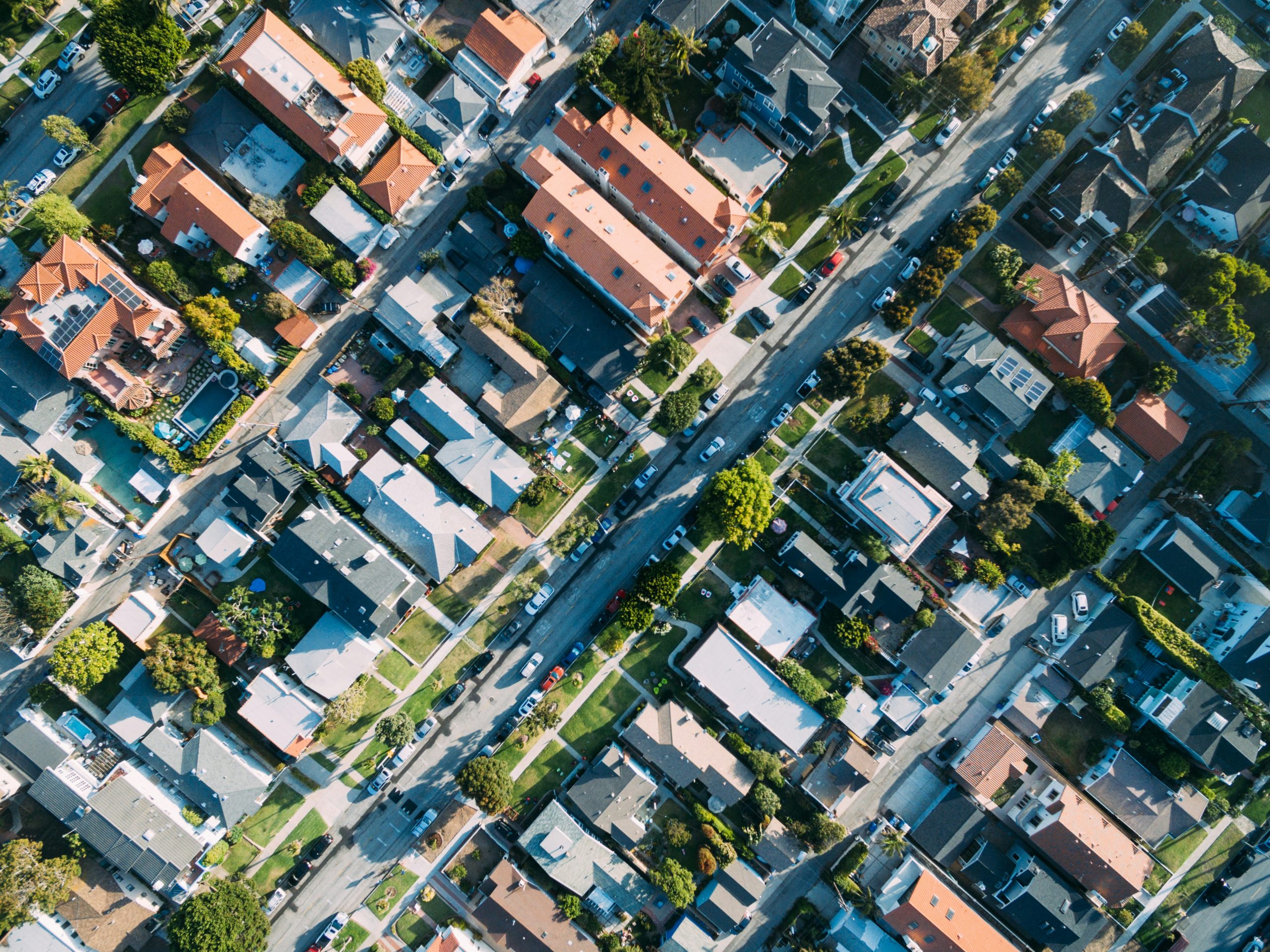
Westchester was built differently — literally. The vast majority of its housing stock dates from the 1940s and 1950s, a post-war suburban development era when lot sizes were generous by design. Streets in Kentwood, Loyola Village, and Westport Heights were platted with 5,500–7,500 SF lots as the standard, not the exception. Those dimensions haven't shrunk. They're baked into the neighborhood's DNA.
The Numbers That Change the Conversation
This is where most families get surprised, so let's go through it carefully.
Culver City median single-family home price: ~$1.9M Westchester median single-family home price: ~$1.7M
The median home in Westchester sells for $150,000–$200,000 less than in Culver City. That's the starting point — and it already runs counter to what most people assume.
Now layer in what you're actually buying for that money:
| Culver City | Westchester | |
| Median SFR price | ~$1.9M | ~$1.7M |
| Typical lot size | 4,000–5,500 SF | 5,500–7,500 SF |
| Typical home size | 1,100–1,800 SF | 1,400–2,400 SF |
| Price per sq ft | $679 | $900 |
| Avg. days on market | 83 days | 38–42 days |
The price-per-foot figure is higher in Westchester — $900 vs. $679 — which is why the comparison can initially seem to favor Culver City. But that metric is measuring the cost of the structure, not the cost of the land or the total value of what you're acquiring. When you factor in lot size and total home size, the picture flips.
The Yard Space Calculation Nobody Does Until We Show Them
Your brief asked for this specifically — and it's the number that tends to end the debate.
In Culver City at $1.9M, a typical SFR sits on a roughly 4,500 SF lot. After the building footprint, you're looking at perhaps 800–1,200 SF of usable rear yard. Call it 650 SF of backyard per $1M spent.
In Westchester at $1.7M, a typical SFR on a 6,500 SF lot leaves you with 1,500–2,000 SF of usable outdoor space depending on the floor plan. That's roughly 1,000 SF of backyard per $1M spent — more than 50% more outdoor space for each million dollars of purchase price.
For a family with a five-year-old and a Labrador, that gap isn't an abstraction. It's the difference between a patch of concrete and a place to actually live outside.
The math gets even more interesting when you consider the renovation potential. Westchester's mid-century ranches — most built between 1945 and 1960 — have bones that respond well to thoughtful updating. Open the floor plan, push out a rear wall, add bifold doors to the backyard, update the kitchen. The neighborhood is in the middle of exactly this renovation wave right now, as buyers who understand the value proposition invest in properties that a decade ago were considered overlooked.
What You Keep — And What Gets Better
The fear driving most Culver City families away from this move is the idea of losing their neighborhood identity. Let's be specific about what actually stays:
Amazon, Apple, Netflix, Google — all within the same commute window. Silicon Beach employers aren't any further from Westchester than from Culver City. Several are closer.
The Culver City dining corridor — still 5 minutes away. Rustic Canyon, Gjusta, Erewhon, Platform — all still your Saturday morning options.
LAX — actually closer from Westchester, which for frequent flyers is a genuine daily quality-of-life improvement, not a consolation prize.
What changes is the daily texture of home life. A backyard where the kids disappear after school. A driveway that fits two cars. A guest room that doesn't double as storage. Room to breathe in a way that Culver City's density — as wonderful as the neighborhood is — simply doesn't offer at this price point.
The School Picture
For families where school quality drives the decision as much as square footage, Westchester has an ecosystem that surprises people who haven't looked closely.
Loyola High School — a Jesuit college-preparatory institution with one of the strongest academic reputations in Los Angeles — sits directly in Westchester. For families with sons approaching high school age, this is not a small thing. It's the kind of anchor institution that Bay Area families specifically recognize and seek out, because it mirrors the private school ecosystem they're accustomed to.
On the public side, Westchester's elementary options — Kentwood, Westport Heights, Loyola Village, Paseo del Rey — are active, well-regarded neighborhood schools with involved parent communities. The kind of schools where you actually know the principal.
For families currently in Culver City Unified — a strong district with a loyal following — the transition requires some research. But for families whose children aren't yet school-age, or who are already considering private options, Westchester's school infrastructure is a genuine draw rather than a compromise.
The Equity Math for Culver City Sellers
Here's the financial architecture that makes this move structurally sound for most Culver City homeowners who've been in their homes for five or more years.
Culver City home values have appreciated significantly — the average home value is $1,272,174, up year over year, with owners who purchased before 2020 sitting on substantial equity. If you bought a Culver City condo or smaller SFR for $900K–$1.2M in 2018 or 2019, you're likely carrying $400K–$600K in equity today.
That equity, deployed into a Westchester purchase at $1.6M–$1.85M, often produces a scenario where the monthly payment on the new, larger home is comparable to — or in some cases lower than — a refinanced current payment, depending on rate timing and down payment structure.
The other factor worth flagging: Culver City's average days on market is currently 83 days. That's a longer sales cycle than most homeowners expect, and it means families who want to close by a specific date — start of a school year, end of a lease on a rental backup — need to list earlier than they think. We plan backwards from your target move date, not forward from the day you decide to list.
A Realistic Picture of the Move
We've helped a number of families make this specific transition. The pattern is consistent: they spend six months assuming the move doesn't make financial sense, run the actual numbers in a single meeting, and realize the gap is smaller than they thought — sometimes nonexistent.
The families who've done it don't describe it as a trade-off. They describe it as the version of the Westside they didn't know existed. Same community energy. Same proximity to everything they value. A backyard the kids actually use. A home that fits the life they're living now, not the one they had in 2018.
If that sounds like a conversation worth having, we're here for it.
Ready to See What's Available?
The Stephanie Younger Group was the #1 real estate team in the City of Los Angeles in 2025 — 286 clients, $438M in sales, averaging 28 days on market and $972 per square foot. We know both of these neighborhoods at the street level, including which Westchester blocks are mid-renovation, which are already finished, and which are still priced like it's 2021.
See current Westchester listings →
Read our Westchester neighborhood guide →
Find out what your Culver City home is worth →
The Stephanie Younger Group | Compass | Los Angeles Market data sourced from Redfin, Zillow, and MLS closed sales as of Q4 2025 – Q1 2026. Yard size estimates based on typical lot configurations; actual dimensions vary by property. 2025 performance data based on MLS sales, January 1 – December 21, 2025.
More From Our Blog




Social Media
Follow
on Instagram
on Instagram


